

Steal My Proven Money Rules as an Everyday Working Mom Who Finds Joy in the Little Things
| Affiliate disclaimer: This post may contain affiliate or referral links. If you make a purchase or sign up through one of these links, I may earn a small commission at no additional cost to you. I only share products and tools we personally use and genuinely recommend. |
| Financial disclaimer: I am not a financial advisor. Everything shared here is based on our own experience and what has worked for our family. Please do your own research and speak with a qualified financial professional before making major financial decisions. |
If someone asked me how we paid off more than $460,000 of debt, I don’t think I would start by talking about a budget. If I’m being honest, even as someone who worked in a financial literacy office for a short bit, budget was rarely in my vocabulary over the last ten years. In fact, I used to cringe at the word budget, that’s how much I disliked it.
Now, what I would tell them is that my husband and I made a handful of decisions in our twenties that slowly became the way we lived. None of them felt especially revolutionary at the time. They were simply little rules we kept following, even as our income, family, and goals changed.
Looking back now, almost everything we have built can be traced back to those same habits. We paid off our first home in five years, paid off the land where we now live, paid off vehicles, continued investing for retirement, and eventually built our forever home on twenty acres.
We didn’t do it because we had some perfect financial plan from the beginning. Quite the opposite, really. We did it because we found a few things that worked for us, and then we kept doing them.
These rules will not fit every family, and I don’t think they need to. Personal finance is personal for a reason. But maybe one or two of them will get you thinking about the kinds of rules you want your own family to live by, too.
1. One team, one dream. We share our finances.
My husband and I have shared finances since the beginning of our marriage. Not because someone told us it was the only right way to manage money, but because it was what made the most sense to us. When we got married, finances felt complicated. I had a checking and savings, he had a checking and savings, we opened a joint savings, we both had different credit cards we used for different things, investment accounts, and more. We originally moved to shared finances to simplify. But, over time, it became so much more than that.
We have always looked at our finances as part of the life we are building together. One checking account, one savings account, one set of goals, together. We do have multiple savings buckets and different investment accounts, but we do not divide our day-to-day money into “mine” and “his.” This might ruffle some feathers, but we also don’t allocate spending money for one another, either!
I know plenty of couples manage their finances differently and are perfectly happy with that arrangement. For us, though, shared finances removed a lot of opportunities for resentment, confusion, or scorekeeping. There is no question of who should pay for groceries, whose income covers childcare, or whether one person contributed more toward a shared goal. It all belongs to the same household, and every decision affects the same version of life we’re trying to build.
I think that shared mindset has mattered far more than the actual number of accounts we have.

2. We don’t keep score
This is closely connected to sharing our finances, but I think it deserves its own rule.
We have never cared much about who earns more or who spends more in any given month. Naturally, we each spend more in different areas because we have different interests and responsibilities. He may spend more on tools, the garage, or something for the property. I may spend more on the house, clothing, content creation, or a business idea.
We don’t compare those purchases against each other, we compare them against the goals we have agreed on together.
That doesn’t mean every purchase is automatically a yes. Larger purchases are still conversations, and sometimes one of us brings the other back to reality. But the conversation is never, “you spent this, so now I should get to spend that.”
It is more often, “Does this make sense for us right now?”
Scorekeeping turns money into a competition. Shared goals turn it into a tool. We care much more about what we are building together than we do about making every month look perfectly equal.
3. We use credit cards for almost everything, and pay them off every month
I genuinely could not tell you where my debit card is right now.
We use credit cards for almost all of our spending, including groceries, gas, restaurants, online purchases, household expenses, and regular bills. The important part is that we pay every card off in full each month. We never carry a balance or pay interest. That’s non-negotiable.
We have chosen cards based on the categories where we already spend money. We use one for groceries and online retailers, another for gas and restaurants, and another for purchases that do not fit neatly into those categories. We also keep a rotating cash-back card for certain times of the year when the categories make sense for us.
You can learn more about the credit cards we use, and our favorite money tools in this blog post.
We’re not serious travel hackers, and we are not constantly opening and closing cards to chase sign-up bonuses. There is an entire community of people who do that very successfully, but it is not really our approach. For us, it is simply about earning something back on money we were already going to spend.
Instead of immediately applying our rewards to the statement balance, we often save them for something we want but don’t necessarily want to spend our regular dollars on. Over the years, rewards have helped pay for things like home decor, beauty products, kids’ items, and other purchases that feel more “fun” than necessary. It’s our guilt-free approach, I suppose.
The system only works because we treat our cards like debit cards. If the money is not available to pay the balance at the end of the month, we do not put the purchase on the card.
Credit cards can be a useful tool, but only when used responsibly.

4. We practice delayed gratification
We rarely make large impulse purchases. When we want something, we usually think about it, talk about it, plan for it, and decide whether it still feels worth buying once the initial excitement wears off.
Sometimes it does. Sometimes it does not.
Delayed gratification is not about never getting the things you want. It is about creating enough space between wanting something and buying it to figure out whether you truly value it. That pause has saved us a lot of money over the years.
It has also helped us avoid lifestyle creep. Our income today looks very different from what it did when we first got married, but we have never automatically upgraded every part of our lives just because we technically could. There have absolutely been areas where we have chosen to spend more. We built a custom home, we invest in tools and projects we care about. We take trips, eat out, and buy things that make our lives easier or more enjoyable. Just like most people.
The difference is that we try to make those increases intentionally, and we create space between them.
Lifestyle creep usually does not happen because of one enormous decision. It happens through a hundred smaller upgrades that each feel harmless on their own. A more expensive vehicle, a few additional subscriptions, more frequent takeout, nicer versions of everything, and suddenly the extra income that was supposed to create freedom is already spoken for.
We try to keep asking ourselves whether an upgrade actually improves our life or simply gives us a more expensive version of what we already had.
5. We make room for joy
For most of our financial journey, we did not have a formal category in our budget called “joy.” But we have always made room for it.
Paying off debt never meant we had to stop enjoying our lives until every goal was complete. That would have made the entire process feel miserable, especially because some of our goals took YEARS.
We still went on donut dates. We took small weekend trips. We bought treats, celebrated milestones, went to community events, and spent money on things that made our lives feel full. A lot of our favorite family memories have cost very little. Packing snacks and visiting a park we have never been to, going to a free local event, riding bikes, making dinner at home, or getting ice cream doesn’t require a huge entertainment budget.
At the same time, we do not believe every enjoyable purchase needs to be “cheap” to be valid. Sometimes the thing that brings us joy does cost more, and we choose to spend on it because it aligns with what matters to us. The key is knowing the difference between something that adds real value to your life and something you are buying out of boredom, comparison, or habit.
We are willing to spend on what matters, and we are also willing to say no to a lot of things that don’t. Two things can be true. That combo has helped us enjoy our life without feeling like every desire needs to become a purchase.
6. We talk about money, a lot.

Money is not a taboo topic in our house. We talk about it all. the. time. And, we talk about it with our kids too.
I think a lot of us grew up hearing things like, “Money doesn’t grow on trees,” or being told that money was something adults discussed privately. You could tell it mattered, and sometimes you could even feel the stress around it, but you were not necessarily invited into the conversation. You were left to figure a lot of it out on your own, often without knowing what questions to ask or who it was okay to ask them to.
That is not how we want money to feel in our home.
We talk about what is coming up, what we want to save for, what we have been spending, what feels too high, what we want our future to look like, and whether our current choices are moving us toward it. Not every conversation is a formal budget meeting. Most of them happen naturally while we are driving, cooking dinner, working on a project, or talking before bed.
Because we discuss money regularly, it rarely becomes one big, emotionally charged conversation. We are usually aware of what the other person is thinking long before we need to make a major decision. I think avoiding money conversations makes them heavier than they need to be. When you rarely talk about it, every discussion can feel serious, uncomfortable, or like someone is in trouble. When money becomes a normal topic, it starts to feel more like any other part of running a household.
We try to use that same approach with our kids. Instead of simply saying, “We can’t afford that,” we might explain that it is not something we are choosing to prioritize right now. We want them to understand that having the money to buy something and deciding that it is worth buying are not always the same thing.
Talking about saving, spending, working, generosity, and the fact that money can be used in a lot of different ways is also a topic of conversation. It can buy things we need, create experiences, help other people, and give us more choices in the future. My hope is that our kids grow up seeing money as a tool they know how to use, not a secret topic they are afraid to bring up.
We share our dreams out loud too. Talk about retirement, the house, the property, future businesses, family experiences, and what owning more of our time could eventually look like. Those conversations remind us why we are making the choices we are making now, and they are slowly teaching our kids that money is not just about what you can buy today. It is also about the life you are building for tomorrow.
7. Invest early and consistently
I opened my first retirement account in my early twenties, although probably later than I should have. My dad had been nudging me to get started for a while, and I responded the way a lot of people do when someone gives them good advice before they’re ready to hear it: “Yeah, yeah, I know.”
Eventually, I did open the account. I figured it out mostly on my own, without anyone sitting beside me and walking me through every step. I did not contribute nearly as much as I wish I had in those early years, but I am still incredibly glad I started when I did.
My husband started investing even earlier than I did, and when we look at the difference time has made, it is easy to see how powerful an early start can be. You don’t need a huge amount of money to begin. Something is better than nothing, and the earlier you start, the more time your money has to grow.
As our income has increased, so have our contributions. We now prioritize our workplace retirement accounts, HSA, and additional investments, and we continue learning as our financial situation changes. There is always another layer to understand, and we are still figuring things out as we go.
We are not professional investors, and we do not spend our time picking individual stocks or trying to predict what the market will do next. Our approach is fairly boring, which is exactly how we like it. We invest consistently, use broad index funds, and give the money time to do its job.
That is also why I believe in giving kids as much of a head start as you reasonably can. It does not have to mean fully funding their entire future or contributing a large amount every month. Even a small amount invested early can become meaningful because kids have something adults can never go back and recreate: time.
8. We pay attention
You do not have to track every single dollar to make progress with money, but you do have to pay attention.
For much of our first debt payoff journey, we were not using an elaborate monthly budget, but we were still very aware of our finances. We knew what was coming in, where the majority of it was going, what our big goals were, and which expenses were helping or hurting those goals.
We regularly looked for the best return on our money. That didn’t always mean choosing the cheapest option. Sometimes spending more upfront saved us money later. Sometimes the cheapest option was perfectly fine. We tried to think about the full value of the purchase instead of only the initial price.
When we noticed spending that was not adding much to our lives, we cut it. When an expense mattered to us, we kept it and adjusted somewhere else.
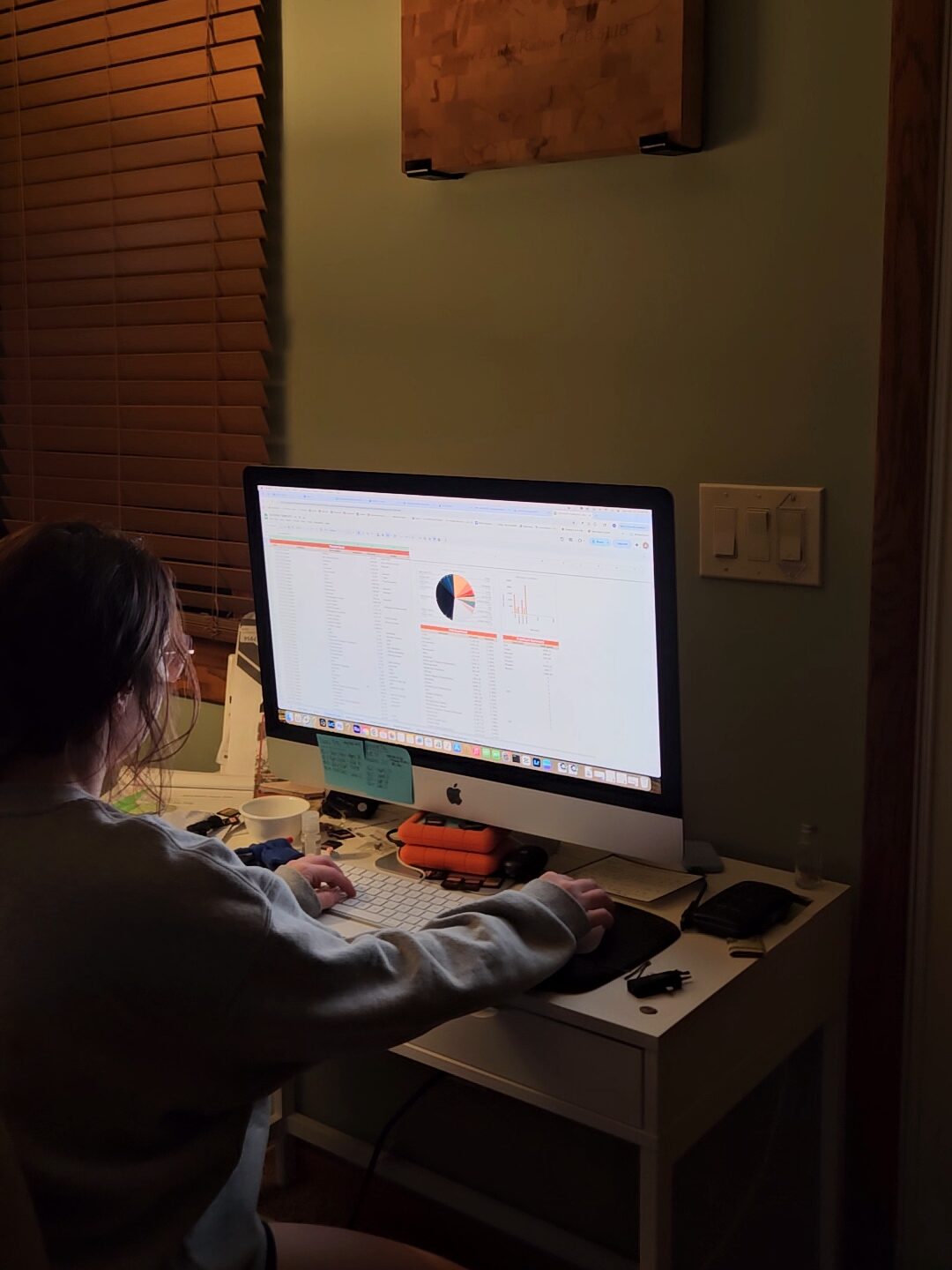
More recently, I started tracking our spending much more closely through the budget template I created. Seeing everything in one place has made us even more intentional, but not because the spreadsheet tells us we are allowed or not allowed to spend.
It simply gives us the information we need to make better decisions.
A budget is not a moral scorecard. Spending more in one category does not make you bad with money, and spending less does not automatically mean you are doing everything right.
The value is in understanding what happened and deciding whether it reflects the life you actually want.
Budgeting itself will not make you wealthy. Awareness, consistency, and the decisions you make with that information are what create progress.
None of these rules are especially exciting
There is nothing revolutionary on this list. You have probably heard some version of most of these ideas before.
The hard part is not knowing what to do, it’s continuing to do it when your income grows, when you are tired, when something new looks exciting, or when everyone around you seems to be upgrading their life faster than you are. That’s the hard part.
We are not financial experts. Far from them! We are two working parents who decided we wanted to build a life we genuinely loved, and we have made a lot of the same quiet choices over and over again to do it. The decisions you make today, will add up to the goals you’re after tomorrow.
The decisions we’ve made helped us pay off more than $460,000 in debt, including our first home, land, and vehicles. They helped us save for and build our forever home. They helped us continue investing while raising two kids and enjoying the life happening around us, and eventually they’ll help us retire early one day.
None of our financial situations happened because we were perfect. We have spent money we regretted, changed our minds, adjusted priorities, and learned as we went. But through it all, we kept paying attention to where we wanted to go. Our north star.
That is really what these rules are about. They are not about having the strictest budget or spending the least amount possible. They are about using money to build the life that we’re always imagining.
Ready to create your own money system?
I created my Budget Template because I wanted one place where I could see our income, spending, savings, debt payments, and investments without making the process more complicated than it needed to be.
It is the same system I use to understand where our money is going and whether our spending still aligns with the life we are trying to build. It also holds us accountable to spending money on the things we say we were going to spend money on.
For those working toward FI, or financial independence, I also created a FIRE Dashboard to track retirement progress, estimated timelines, and the bigger goal behind all of this. Because for us, the goal has never only been paying off debt. The goal is building enough freedom to own more of our time.
We are not all the way there yet, but we are much closer than we used to be. These eight rules are a big reason why.